

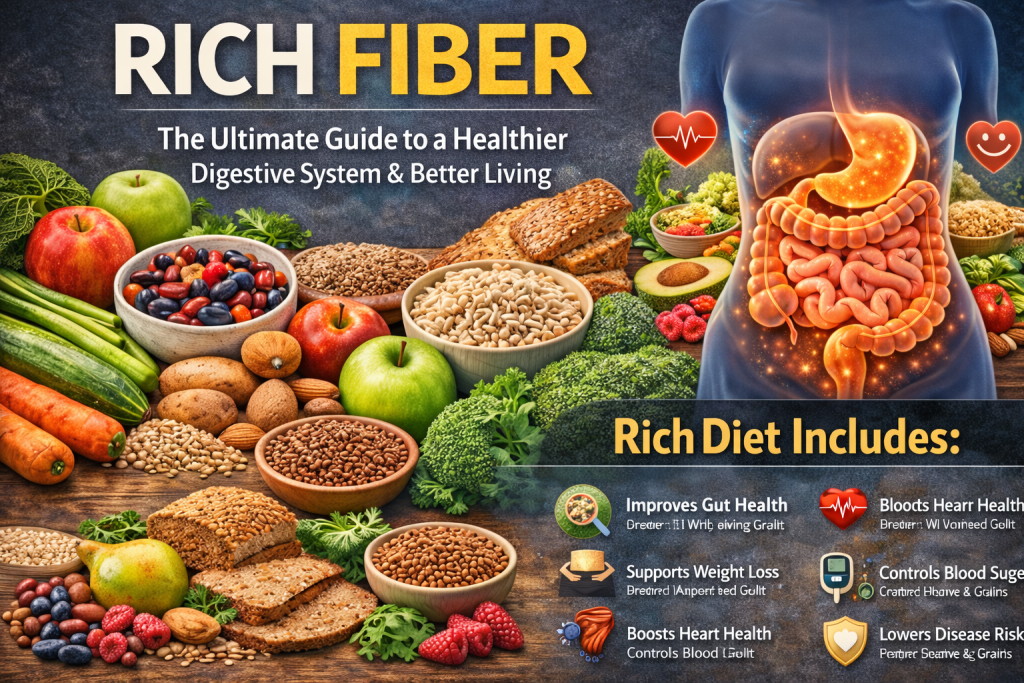
In today’s fast-paced lifestyle, people often focus on protein, vitamins, and minerals while ignoring one of the most essential nutrients — fiber. A rich fiber diet plays a crucial role in maintaining overall health, supporting digestion, managing weight, and preventing chronic diseases. Despite its importance, fiber intake remains insufficient in many diets around the world.Rich Fiber: The Ultimate Guide to a Healthier Digestive System and Better Living.
This comprehensive guide explores everything you need to know about rich fiber, its types, benefits, food sources, daily requirements, and how to include it naturally in your daily meals.
What Is Fiber?
Fiber is a type of carbohydrate found in plant-based foods that the body cannot fully digest or absorb. Unlike other carbohydrates, fiber passes through the digestive system largely intact, providing several health benefits along the way.
A fiber-rich diet supports the gut, regulates blood sugar, and helps the body function efficiently without adding extra calories.
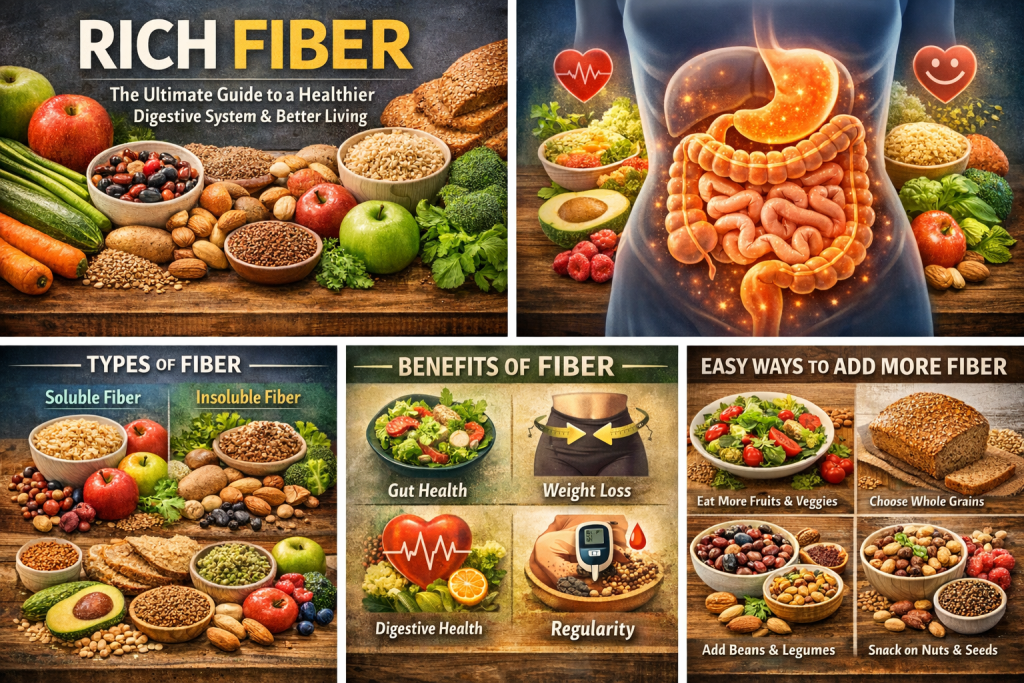
Types of Dietary Fiber
Dietary fiber is mainly divided into two categories, each offering unique benefits. fiber intake remains insufficient in many diets around the world.Rich Fiber: The Ultimate Guide to a Healthier Digestive System and Better Living.
Soluble Fiber
Soluble fiber dissolves in water to form a gel-like substance. It helps slow digestion and is particularly beneficial for heart health and blood sugar control.
Sources of soluble fiber include:
- Oats
- Barley
- Apples
- Citrus fruits
- Beans
- Lentils
Insoluble Fiber
Insoluble fiber does not dissolve in water. It adds bulk to stool and helps food pass more quickly through the digestive tract.
Sources of insoluble fiber include:
- Whole wheat
- Brown rice
- Nuts
- Seeds
- Vegetables
- Wheat bran
A rich fiber diet should include both types for maximum health benefits.
Why Is Rich Fiber Important for the Body?
Fiber is not just about digestion. It affects almost every system in the body.
Improves Digestive Health
Fiber helps regulate bowel movements, prevents constipation, and supports healthy gut bacteria. Insoluble fiber keeps the digestive tract moving, while soluble fiber feeds beneficial gut microbes.
Supports Heart Health
Soluble fiber helps reduce LDL (bad) cholesterol levels by binding to cholesterol particles and removing them from the body. A diet rich in fiber lowers the risk of heart disease and stroke.
Helps Control Blood Sugar Levels
Fiber slows the absorption of sugar, preventing sudden spikes in blood glucose levels. This is especially beneficial for people with diabetes or insulin resistance.
Aids in Weight Management
Fiber-rich foods are more filling and take longer to digest, helping you feel full for longer periods. This reduces overeating and supports healthy weight loss.
Reduces Risk of Chronic Diseases
A consistent rich fiber intake has been linked to a reduced risk of:
- Type 2 diabetes
- Colon cancer
- Obesity
- Cardiovascular disease
Daily Fiber Requirements
The recommended daily fiber intake varies by age and gender.
- Men: 30–38 grams per day
- Women: 21–25 grams per day
- Children: 14–28 grams per day
Unfortunately, most people consume far less than the recommended amount. Increasing fiber intake gradually is key to avoiding digestive discomfort.
Rich Fiber Foods You Should Include in Your Diet
Fruits High in Fiber
Fruits provide natural sweetness along with vitamins, antioxidants, and fiber.
Top fiber-rich fruits include:
- Apples (with skin)
- Pears
- Bananas
- Berries
- Oranges
- Guava
Vegetables Rich in Fiber
Vegetables are low in calories and high in fiber, making them ideal for daily meals.
Examples include:
- Broccoli
- Carrots
- Spinach
- Brussels sprouts
- Sweet potatoes
- Green peas
Whole Grains and Cereals
Whole grains retain their bran and germ, making them high in fiber.
Best options include:
- Brown rice
- Whole wheat bread
- Oats
- Quinoa
- Barley
- Millet
Legumes and Pulses
Legumes are among the richest sources of dietary fiber and plant-based protein.
High-fiber legumes include:
- Lentils
- Chickpeas
- Kidney beans
- Black beans
- Green gram
- Soybeans
Nuts and Seeds
Nuts and seeds offer fiber along with healthy fats and minerals.
Examples include:
- Almonds
- Chia seeds
- Flaxseeds
- Walnuts
- Pumpkin seeds
Benefits of Rich Fiber for Digestive Health
A fiber-rich diet improves the gut environment and keeps digestion smooth.
Prevents Constipation
Fiber adds bulk to stool and softens it, making bowel movements easier and more regular.
Promotes Healthy Gut Bacteria
Soluble fiber acts as food for probiotics, supporting a balanced gut microbiome.
Reduces Digestive Disorders
Adequate fiber intake lowers the risk of hemorrhoids, irritable bowel syndrome (IBS), and diverticular disease.
Role of Rich Fiber in Weight Loss
Fiber plays a powerful role in weight management.The Ultimate Guide to a Healthier Digestive System and Better Living.
- Keeps you full longer
- Reduces unnecessary snacking
- Lowers overall calorie intake
- Improves metabolism
People who consume a fiber-rich diet tend to maintain healthier body weight without extreme dieting.
Rich Fiber and Heart Health
Fiber improves heart health in several ways:
- Lowers cholesterol levels
- Regulates blood pressure
- Reduces inflammation
- Improves blood vessel function
Studies show that people who eat fiber-rich foods have a significantly lower risk of heart disease.
Fiber and Blood Sugar Control
Soluble fiber slows carbohydrate digestion and sugar absorption, helping regulate blood sugar levels.
This makes fiber especially important for:
- Diabetics
- Pre-diabetics
- People with insulin resistance
A rich fiber diet helps maintain stable energy levels throughout the day.
How to Increase Fiber Intake Naturally
Start Your Day with Fiber
- Choose oatmeal instead of refined cereal
- Add fruits and seeds to breakfast
Switch to Whole Grains
- Replace white rice with brown rice
- Use whole wheat flour instead of refined flour
Add More Vegetables
- Include vegetables in every meal
- Eat salads and soups regularly
Snack Smart
- Choose fruits, nuts, and roasted legumes
- Avoid processed snacks
Drink Enough Water
Fiber works best when combined with proper hydration.
Common Mistakes While Increasing Fiber
Increasing Fiber Too Quickly
Sudden fiber increase can cause bloating and gas. Increase intake gradually.
Not Drinking Enough Water
Fiber absorbs water. Without hydration, it may worsen constipation.
Relying on Supplements Only
Natural fiber from whole foods is more beneficial than supplements.
Fiber Supplements: Are They Necessary?
Fiber supplements can be helpful in certain situations, but they should not replace whole foods. Natural sources provide additional nutrients like vitamins, minerals, and antioxidants.
Consult a healthcare professional before using supplements regularly.
Rich Fiber Diet for Different Age Groups
Children
Supports digestion, growth, and immunity.
Adults
Helps manage weight, stress, and energy levels.
Elderly
Prevents constipation, improves heart health, and supports digestion.
Final Thoughts on Rich Fiber
Fiber is a simple yet powerful nutrient that improves overall health from head to toe. A rich fiber diet supports digestion, heart health, weight management, and disease prevention. By choosing whole foods and making small dietary changes, you can easily meet your daily fiber needs and enjoy long-term health benefits.
Adopting a fiber-rich lifestyle is not a trend — it’s a sustainable way to live healthier and happier.